A few kilometres from the dunes, Dayet Srij sometimes fills with water and brings flamingos to the edge of the Sahara. Here's what to know before going to look for them.
You come to Merzouga expecting sand. Camels, perhaps, and a night in the dunes. Flamingos are usually further down the list.
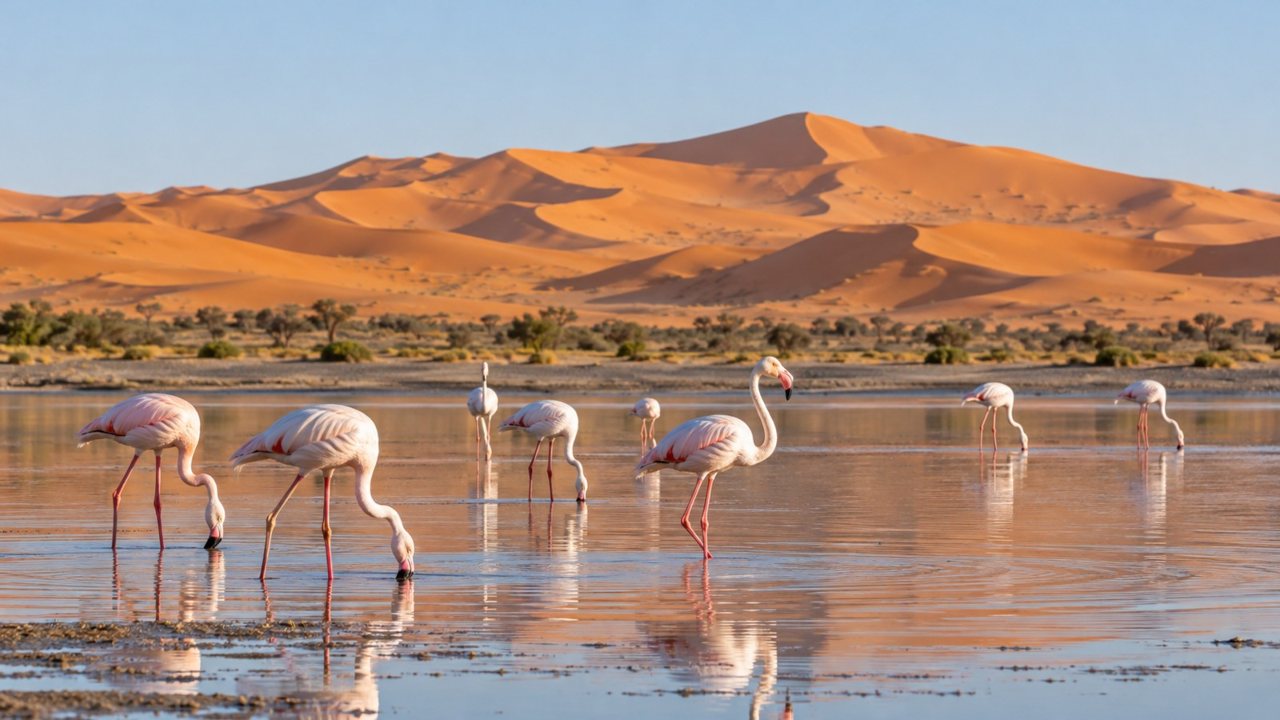
But there is a seasonal lake nearby called Dayet Srij (also written Dayet Srji). When it holds water, greater flamingos can gather in the shallows: long legs, pale pink feathers, and the desert all around them. It's a lovely thing to look for during a stay in Merzouga, as long as you arrive with the right expectations.
At a glance
- Where: Dayet Srij, a seasonal lake a few kilometres west of Merzouga.
- When to look: late winter and spring, especially after rain. Always check locally first.
- Best light: early morning or late afternoon.
- Bring: binoculars, water, sun protection and a warm layer for the morning.
- Good to know: water and birds are never guaranteed.
A lake that isn't always there
Rain can turn the shallow basin of Dayet Srij into a wetland. Dry weather can leave it looking like an empty stretch of ground. A photograph taken in a wet year tells you very little about what you'll find on your own trip.
Before making a special visit, ask someone in Merzouga two questions:
- Is there water in the lake at the moment?
- Have flamingos been seen there recently?
Those two answers are worth more than any list of "best months".
Why the flamingos come here
Flamingos feed in shallow water, using their bills to filter out small food such as crustaceans, algae and insect larvae. When conditions suit them, a temporary lake makes a welcome feeding stop in an otherwise dry landscape.
The species recorded at Dayet Srij is the greater flamingo. Despite the name "pink flamingo", the birds can look surprisingly pale, almost white across much of the body. Their pink comes from pigments in their food, and it's strongest on parts of the wings, the legs and the bill.
It's worth watching them for a while. The slow steps and the heads lowered into the water are part of the experience, even when the birds are too far away for a close photograph.
When should you go?
Late winter and spring are the sensible times to ask about, especially after rain. But the lake doesn't follow a booking calendar: rainfall varies, the water recedes and the birds move on. Even a spring visit can mean a dry lake or no flamingos.
My advice: make the dunes the reason for your trip, and leave room for the lake if conditions are good. Don't plan a long journey around a promised flamingo sighting.
If the lake is dry, there's plenty else to do around Merzouga. There's no need to turn every possible stop into something you have to tick off.
Watching and photographing them
- Go early or late. The light is softer in the early morning and late afternoon.
- Use a longer lens. It lets you keep your distance. With a phone, think about the wider scene (the water, the birds and the desert behind them) rather than trying to fill the frame with one flamingo.
- Give them space. If the birds start moving away as you approach, stop and give them more room.
- Keep vehicles back from the water. Follow local advice about access and never drive onto the lake bed.
- Never make them fly for a picture. Watch quietly and leave feeding and resting birds undisturbed.
- Pack for an exposed stop. Bring water, sun protection and binoculars, plus a layer for a cool morning.
Fitting it into your desert trip
The lake makes most sense when you already have time in Merzouga. If your plan is arrival, camel ride, camp, then straight back on the road after breakfast, there may be little room to linger.
A longer stay gives you more choice about how to spend the day. Tell me you're interested in birds when we plan your route, and I'll leave space for a possible visit instead of squeezing it in before departure.
And if the flamingos are there, give yourself time to put the camera down. Watching them feed at the edge of the desert is reason enough to stop.