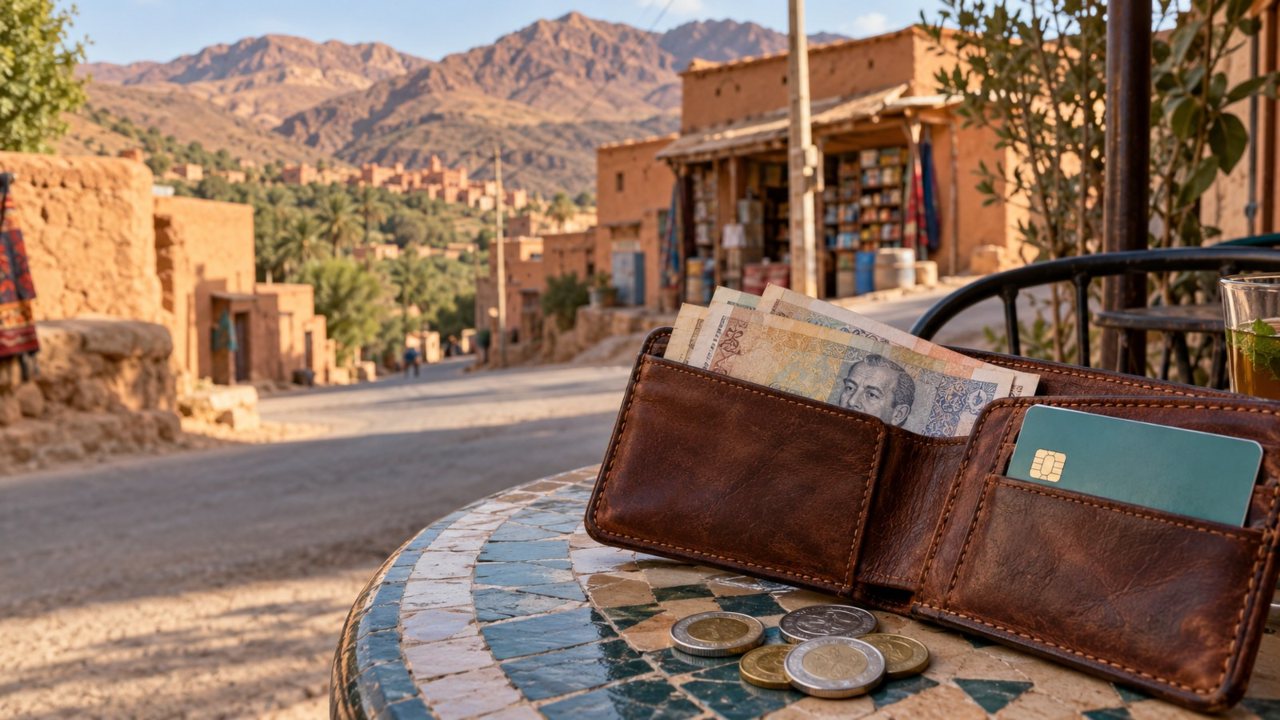
Cards work in many hotels and some restaurants in the big cities. Once you leave them, cash is king. A little planning saves a lot of stress.
At a glance
- Currency: the Moroccan dirham (MAD). It's a closed currency, so you get it once you arrive, not at home.
- Cards: accepted in many hotels, larger restaurants and shops in cities; rarely in villages, markets or small cafés.
- ATMs: easy to find in cities and towns, rare or absent in small villages and the desert.
- Best habit: withdraw in a town before heading into the mountains or the dunes.
Getting dirhams
- ATMs at airports and in towns are usually the simplest option. Your bank may charge a fee, so fewer, larger withdrawals are cheaper.
- Exchange offices (bureaux de change) in cities often give fair rates for euros, pounds and dollars in cash.
- Keep your exchange or ATM receipts if you plan to change dirhams back when you leave.
Before the mountains and the desert
On routes like Marrakech to Merzouga, the last reliable ATMs are in the bigger towns along the way. [Syphax: name the towns where you usually stop for an ATM.] Desert camps and village shops mostly want cash. I always remind guests before we leave the last town, so nobody gets caught out.
How much cash to carry
Enough for meals not included in your trip, tips, drinks, small purchases and anything you might want to buy in a cooperative or market. 2000 DIRHAMS Split it: some in your wallet, the rest somewhere else.
Paying for your trip by card
You don't need cash to secure a private trip with me. I take the deposit by secure card payment through my payments partner, Tab, and you pay in your own currency. The balance is paid during the trip, in cash or by card.
My advice: tell your bank you're travelling, carry two cards from different banks if you can, and always have some dirhams before leaving a town for the countryside.