Tipping is part of everyday life in Morocco, and for many people in tourism it's an important part of their income. But nobody expects you to know the customs before you arrive. Here's a clear guide.
The basic idea
- Tips are always appreciated, never compulsory.
- Small amounts, often, are normal.
- Carry small notes and coins in dirhams: it's hard to tip from a 200-dirham note.
- If service was poor, you don't have to tip.
A rough guide
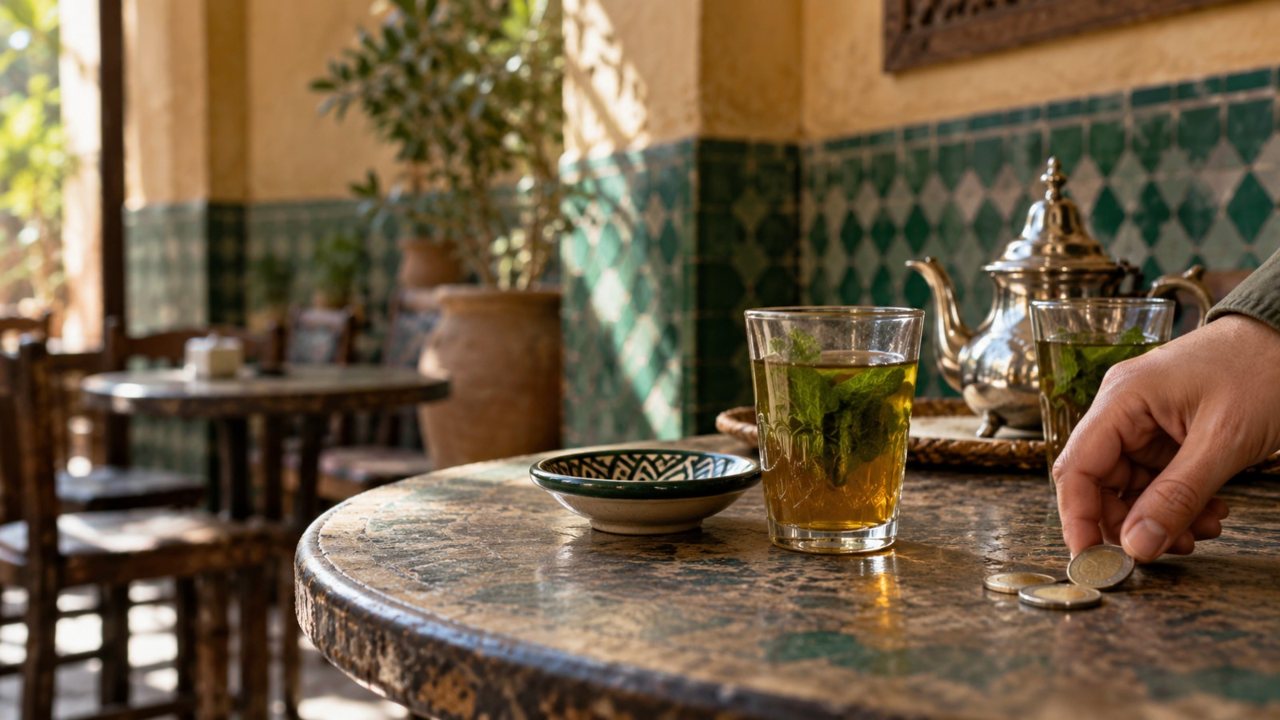
- Restaurants and cafés: around 10% in restaurants; a few dirhams for a coffee or tea.
- Riad and hotel staff: 50-100 dirhams per night, left at the end of your stay or given to the staff directly.
- Porters carrying bags: 10-20 dirhams per bag.
- Car park attendants: a few dirhams when you leave.
- Toilet attendants: a couple of dirhams.
- Local guides (medina, Aït Ben Haddou): 100-200 dirhams for a half-day visit.
- Camel guides in the desert: 50-100 dirhams per camel ride.
- Desert camp staff: 50-100 dirhams, often left in a shared envelope.
- Your driver: entirely up to you. depending on how helpful the driver was.. and also keep in mind the length of your journey.
Photos and tipping
In the squares of Marrakech, people in costume, snake charmers and musicians expect a few dirhams if you photograph them. Agree before you raise the camera, not afterwards. In villages, always ask first; many people would rather not be photographed at all, and that's their right.
When "helpers" appear
In the medinas, someone may start showing you the way without being asked, then expect a tip. If you don't want help, a friendly "la, shukran" (no, thank you) is enough. If you accept the help, a small tip is fair.
My advice: change some money into small notes and coins on day one and keep them in a separate pocket. Tipping becomes easy and quick, and you'll never have to ask for change.