For most people, the night in the dunes is the moment they booked the whole trip for. Here's how it actually goes, so you know what to expect.
Late afternoon: leaving the van
We reach the edge of Erg Chebbi in the afternoon. You leave the big bags in the van, take a small overnight bag, and meet your camels. The ride out is usually around an hour, timed so you're among the dunes as the light turns golden. If you'd rather not ride, most camps can be reached by 4x4 — just tell me when we plan.
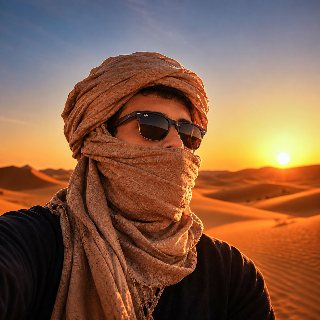
Sunset
Before settling into camp, climb the nearest high dune. It's harder work than it looks — the sand slides back with every step — but the view over the dune sea as the sun drops is the reason people come.
Evening at camp
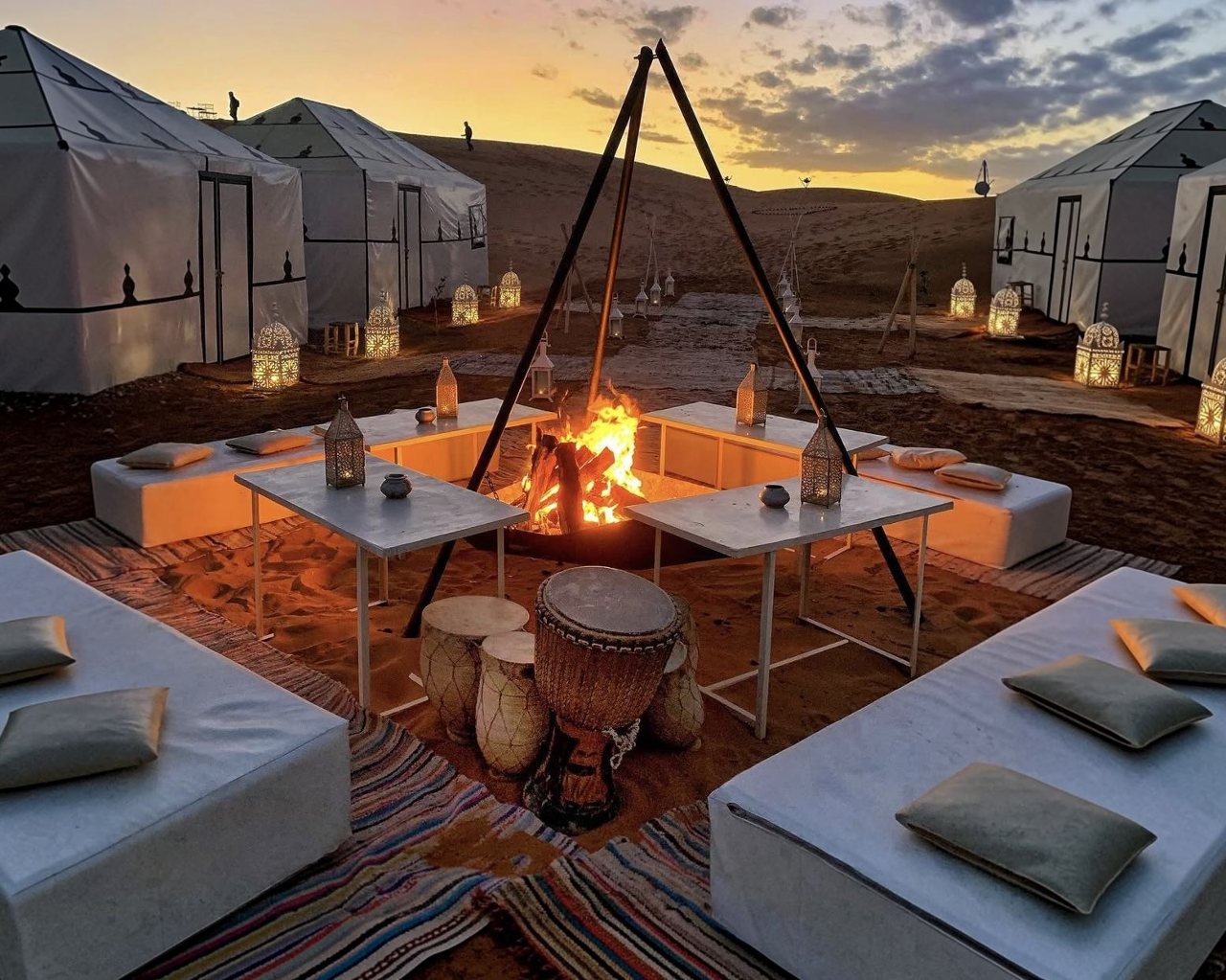
Camps are rows of Berber tents around a central area. There's mint tea when you arrive, dinner — usually soup, a tagine and fruit — and then, most nights, drums and music around the fire. Standards vary: some camps are simple, others have proper beds and private bathrooms in each tent. I'll tell you honestly what the camp on your route is like before you book.
The stars
Walk a few minutes away from the camp lights and the sky fills up. On a moonless night you'll see the Milky Way clearly. Bring a warm layer — it gets cold fast once the sun is gone.
Sunrise
Whoever is awake for it climbs the dune again for sunrise. I'll wake you if you want — no pressure either way. The light on the ridges in the first half hour is extraordinary, and it's the best time of the whole trip for photos.
Morning
Breakfast at camp, then the camel ride back to the van, and we're on the road. On the 3-day trip that's the long drive back to Marrakech; on longer routes it's the Todra Gorge and the Dades Valley.
A few honest notes
- It's not silent. There are other camps in Erg Chebbi. Walk over a ridge and it's just you and the sand, but camp itself is social.
- Want real remoteness? That's Erg Chigaga — further, with fewer camps.
- Two nights beats one. A full day in the desert changes the experience completely.